












But that's just how good Adam West was.
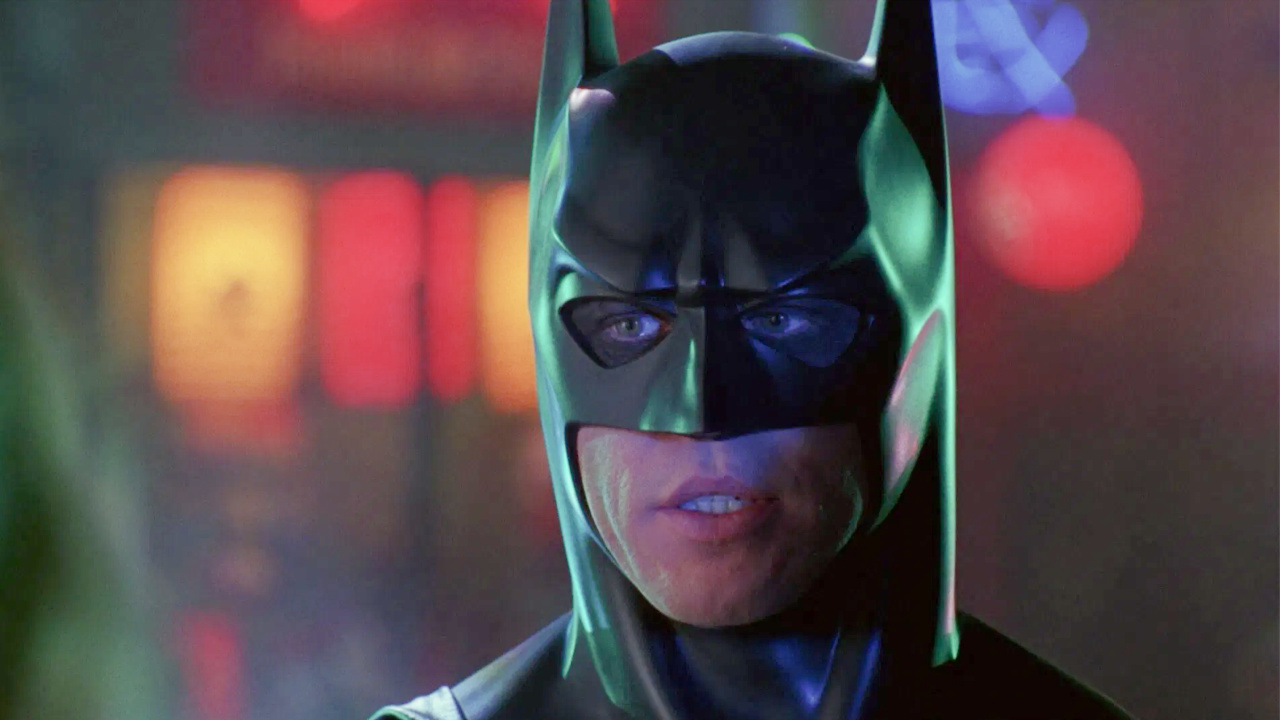
West, the man under the cowl of TV's "Batman" from 1966-1969 who passed away over the weekend at age 88 after a brief battle with leukemia, was that rarest of rare actor, mingling a deeply serious and utterly convincing vocal inflection with a twinkle in his eye that also conveyed that this was all in good fun, as well as an athletically thrown punch with compelling POW!
Bringing the famed DC Comics superhero to television for the first time, West helped make the series an instant (if short-lived) phenomenon, popularized Pop Art interpretations of Americana icons, cemented irony as the prevailing comedic preference of the Baby Boom generation and, in his efforts to support himself after the Bat-craze went POP! with countless personal appearances, laid the foundation of superhero fanboy convention culture that reigns today.
West was also the very first famous person I met when I moved to Los Angeles over 20 years ago, gamely enduring my devolution into a fumbling Chris Farley-esque admirer during a book-signing at the legendary comic book shop Golden Apple.
Moviefone: I'm going to be on my best behavior, I promise you.
Good, because we have a lot of fun.
What's fantastic is that we've seen this sort of great renaissance of interest in the "Batman" TV series that's led to this animated movie. It must be really something special for you to see that after 50 years of all these different interpretations and different actors playing Batman, that there's still a lot of interest in you and your take on the character.
Well, I won't lie, Scott. I mean, it's taken 30 years for the critics to come around, and at last pronounce it as brilliant. It's important! No, it's satisfying, because we've worked hard. I got a chance to work with some really remarkable people. And the new movie that Warners has done, I saw it again the other night, and I'd forgotten how wonderfully funny, and interesting, and imaginative, and all those things that we were. I laughed my head off.
Take me back to that moment when you went from this up-and-coming actor in a superhero suit, having some fun shooting this new show, to the day after people saw it and it became a full-fledged phenomenon. That is an experience that very few actors over the last 50 years have had.
Luckily, I was a little older, somewhat mature, and had had maybe ten or 15 years of television, radio, and so on. I started as a director in TV, and I had radio experience. When it happened, I was surprised. It knocked my socks off. How do you deal with that?
It wasn't easy at first, because when you have children, you try to protect them, and I'm a rather private person. But as it went along, I think I adjusted pretty well, because I loved it when they threw money and hugs and kisses, and all of those warm and wonderful things.
Creating scenes that were funny and ridiculous, and yet inventively wonderful. For example, first of all, we had great writers, and our directors were good -– most of them. And the wonderful thing is that the executive producer, the late Bill Dozier and the others, Charlie Fitzsimons, and I, we all got together with the same kind of concept about tone and what we were doing, and how we wanted to do it.
So that when I'm running up and down the Santa Barbara Pier for half a day with a bomb over my head, trying to get rid of it and I can't, these moments -- comedically -- become fascinating to cook with. And you sense, as you create these scenes, that they have a good chance of working and having longevity. And that's what we've had, which is very rewarding. We've had 50 years of this!
For you as a young actor in Hollywood, working with these legendary actors who came onto the show as guest stars, that must have been a phenomenal sort of education about your business.
It was a wonderful challenge. I'd been under contract at Warners as a leading man kind of guy, and I got a chance to work with people, quite a few good ones, but never like what you just described. So it was a learning experience, it was immensely rewarding with humor, and to observe their great energy. You know, we approached these roles as almost Shakespearean, if you will. Much bigger than life. People like Burgess Meredith, Frank Gorshin -- they really caught on. They got it.
Almost as fast as it came on the scene, "Batman" kind of fizzled out after three seasons, and you've been very honest about the typecasting issues you faced and the struggles. Tell me a little bit about how you got through that roughly 20-year period before fanboy culture rose up and re-embraced you.
That's a wonderful question because suddenly I'm getting terrible stomach pains! Scott, it wasn't easy. What I did, I went out, I did regional theater, I did dinner theater, I did the Mark Taper Forum in LA, I did really crappy films – anything I could to keep working and developing, and pay the damn bills.
And I feel as, an actor, that it is essential to keep practicing, keep using your instrument. So I did that, and after five, six, seven years, I began to catch on with a few things. And after ten years or so, I told myself, "Look, idiot. If people love Batman, if they enjoy it so much, and you know the whole family spectrum has made that apparent, then you better love it too, or there's something wrong with your head."
At that point, that's when fandom started remembering how much they loved you and Burt and Julie and everybody else. Having this new superhero culture rise since, I'd say, the '89 "Batman" movie kicked it off, and being re-embraced and getting to meet thousands of people that grew up on you every year – what's that experience meant to you over the last couple of decades?
Well, several things happened. If somebody comes up and tells me, "I lost my father, he died when I was five, and you became my father," I'm deeply touched by that, and there's sincerity. A guy comes up and says, "Well, I became a judge and a crime fighter first because of you, I think to myself, "Well, hell, I don't deserve that. I was just some pretend crime fighter."
To address the first part of your question, Burt, for example, and I have very different lifestyles. I live mostly in Idaho on a big spread, and we have, like, 18 elk in the backyard. And then I have to get up and travel to wherever I work. So my life experiences are quite different from theirs. But when we get together, that chemistry, the relationship, immediately comes back.
You got to drive the Batmobile. Tell me about that vehicle, the iconic nature of it, and being the guy behind the wheel. I mean, that's another sort of singular honor that you've had over your career.
It was fun from moment to moment. I was scaring the hell out of people with it, especially Burt Ward, who had white knuckles -- but that car, I recently raced in the Batmobile, the new tank-like Batmobile, in a show called "Jay Leno's Garage." So we raced, and guess who won? The f***ing old Batmobile.
It wasn't easy to drive because it had problems with balance and tracking and brakes and so on. I'll tell you, it was funky and colorful, and the kids -– everybody seems to have loved that Batmobile. So do I.
Is there a big takeaway from the whole experience? Something that really you'll never forget from when it was happening, and also the way you're feeling about it has evolved over time.
Well, the only feeling I really have almost every day is I'm the luckiest actor in the world. How many of us, maybe Shatner, Eastwood, a few, get a chance to become an icon of a kind, and do something that has life, longevity, and makes people happy? Hey, I guess they're calling me "The Bright Knight." I like to make people happy. Enough violence. Enough explosions, you know?
"Some days you can't get rid of a bomb!"
Yes, that's right. But I did!